Most software companies have the same issue. They’ve created tons of helpful content, but almost nobody actually uses it. Training videos on YouTube. PDFs on their website. Customers still call support to ask the same questions again and again.
Sometimes the videos are just too long. Latonna Roberson pointed that out very kindly (and I find hilarious) about my season 1 °FAI videos (this one is 30 mins) oops. There’s a solution, which she happily uses on my videos. (I heard you, Latonna.)
A client of mine runs a shop management platform for screen printing and embroidery businesses. Over the years, the software built a solid library of around 100 training videos, how-to guides, FAQs, and setup instructions. The content lived in too many places. It was hard to search. It took too long to dig through. When a customer wanted to connect their accounting software, they often had to watch multiple videos or wait for a support call.
So instead of adding more documentation, I turned all of it into an AI assistant.
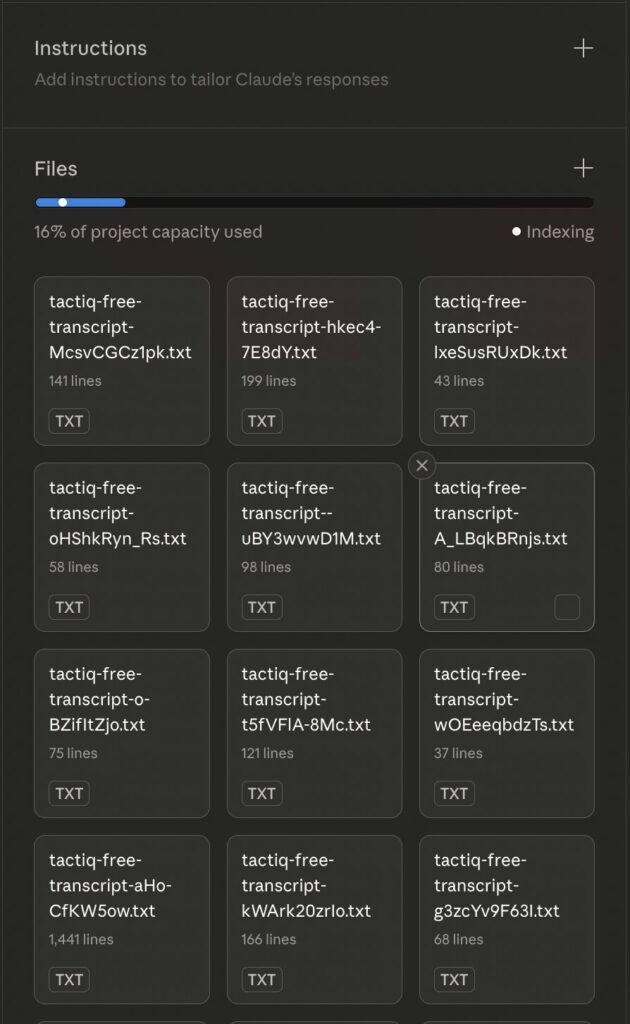
I gathered everything the company had already created. Video transcripts from about 100 YouTube videos (this took roughly 20 minutes). Written guides. Troubleshooting docs. Integration steps. I fed it all into a single, organized knowledge base. That same content now trains an AI assistant that answers questions conversationally, using the exact information the support team relies on.
Behind the scenes, the AI cleans and organizes the material. It groups content by real-world tasks like order entry, accounting connections, shipping, production scheduling, and reporting. I also taught the AI how to communicate clearly and practically. Step by step. It knows how to say when an answer doesn’t exist in its database. Because it understands industry-specific language, it handles stitch counts, screen setups, garment ordering, and artwork approvals without confusion.
For users, it’s simple. They type a question in plain language. The AI answers immediately with clear guidance pulled directly from the company’s own documentation. When a question goes beyond what’s documented, the AI says so. I also included the support number in case the user wants to call.
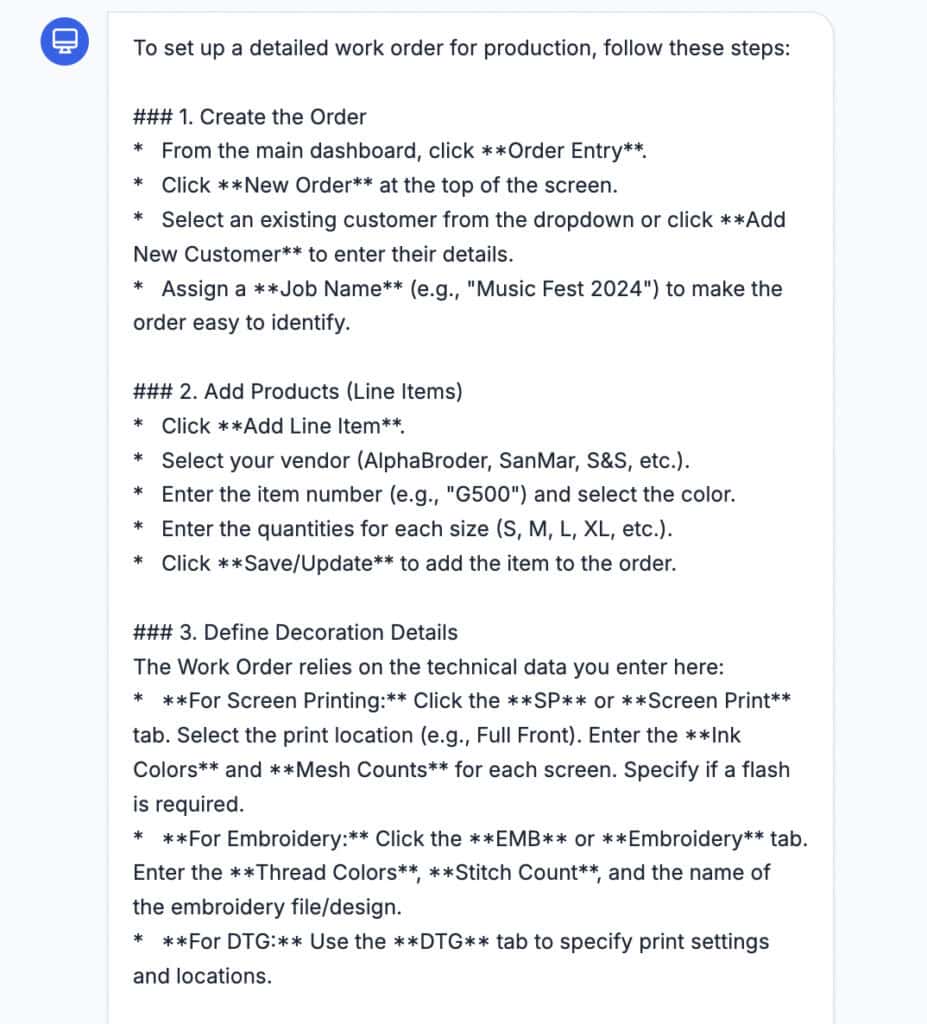
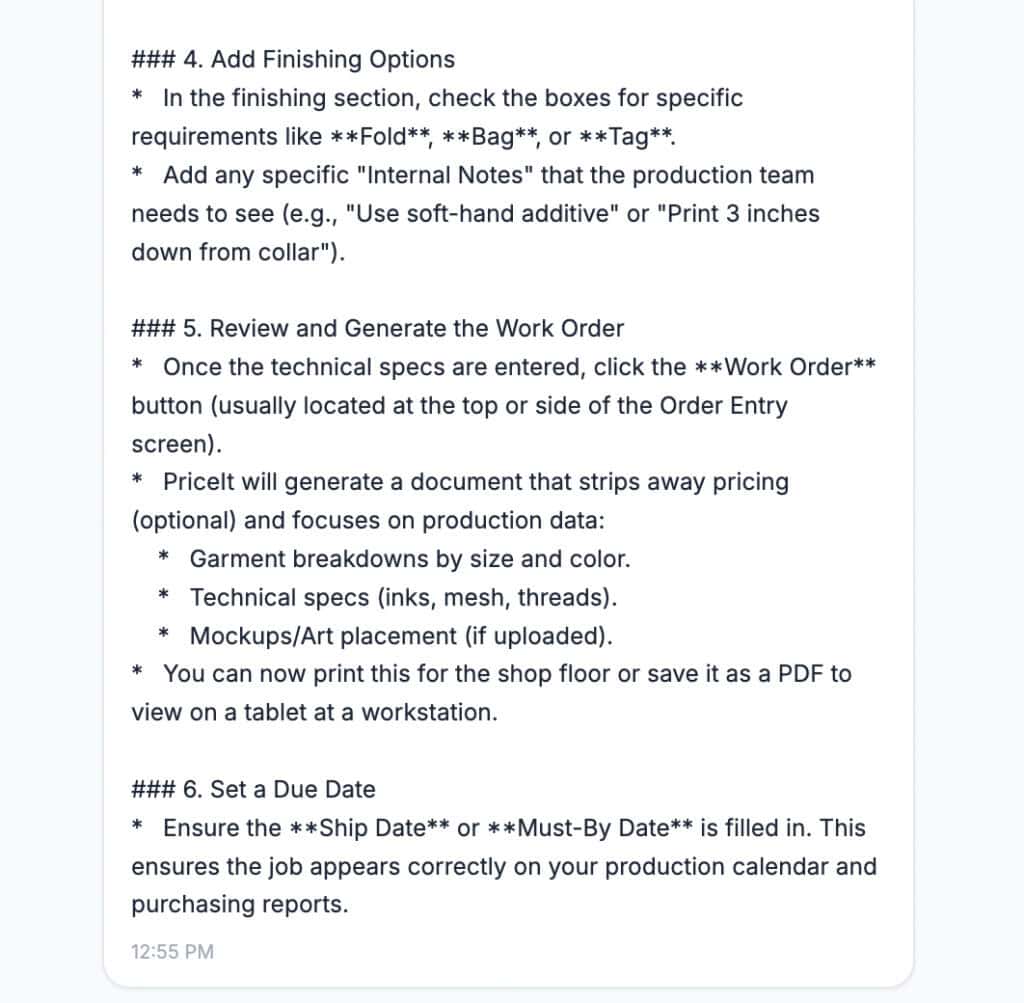
New users learn faster because they ask questions while they work. They don’t have to sit through long tutorials upfront. When the company updates documentation, the AI reflects those changes right away.
Any company sitting on years of documentation can turn it into a conversational support tool. The real value comes from organizing the knowledge well and teaching the AI how to communicate clearly. Do that right, and your training content finally gets used.


This is partially true post. Gemini lied to me about its retrieval capabilities, so I am making some updates and will update this post soon.