There is a big fight on between Hockey Canada, USA Hockey and the International Ice Hockey Federation over rights to display sponsor and who can sell jerseys. It is a boring and twisted tale and ultimately negotiations failed and now we get to see the elite hockey players wearing uniforms that are worse than you might see in a Pee Wee scrimmage.
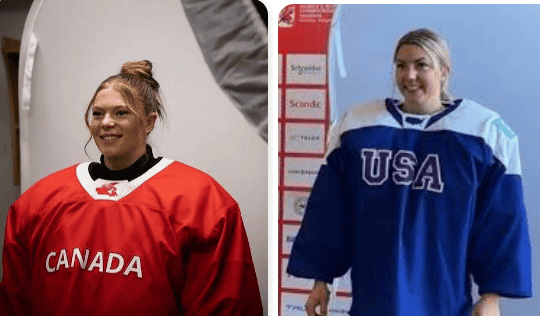
Canada took the ice in a plain red jersey with “CANADA” in white block letters, a little map on the collar, and a lot of empty space. The U.S. wore the same idea in navy with “USA” across the chest. There’s no maple leaf, no crest and no eagle. Fans said they looked like something from a rec league, and they weren’t wrong. These are the best women’s hockey players in the world, and they’re wearing blanks with a word printed on them.
Here’s the boring story of greed and how it happened. In October 2025, the International Ice Hockey Federation (IIHF) signed True Hockey as the “exclusive supplier” of national team uniforms and apparel starting this season. Under the old Nike deal, the IIHF controlled what was worn on the ice, but each country kept the right to sell its own replica jerseys. That money mattered: Canada’s replicas were made by Bauer, and USA Hockey had its own deals. The IIHF then tried to change its bylaws so that it would control the on-ice jerseys, the replicas and the off-ice gear. Under the True Hockey deal, only 15% of royalties would go back to the national federations. Hockey Canada told a Swiss court it could lose about 21 million Swiss francs a year, roughly $36 million Canadian.
Both federations sued. In September the Swiss court ruled that the IIHF can control who supplies the uniforms at its events. It also ruled that it can’t force Canada or the U.S. to hand over their trademarks. So the IIHF controls the jersey, but the countries own the logos and won’t license them. That left these teams wearing their country’s name and nothing else. Players even warmed up in plain black gear with the logos taped over. And True Hockey’s own name was nowhere in the arena, which tells you something about the state of that deal.
Canadian co-captain Laura Stacey wore the Captain’s “C” for the first time in her national team career, and it was sewn onto a jersey without the maple leaf. “We would love to have played in our logo,” she said. She had to answer questions about the uniform instead of a 5-1 win over Sweden.
It’s also worth asking whether this would have happened at the men’s worlds. Would Macklin Celebrini be playing in a red shirt with “CANADA” across the front? Hard to picture. Women’s hockey has been at the bottom of the priority list before. The IIHF cancelled the women’s U18 worlds two years running during COVID while the boys’ events went ahead. This feels like the same story.


Comments