I run projects across multiple businesses, a screen printing company, a media organization and others. The action items live everywhere. In people’s heads, in transcript files, in meeting notes. Nowhere centralized. I needed to make something everyone on specific teams could access and edit from any device, no app installs, no logins.
So I built one from twelve conversation recordings.
Parsing the transcripts
The recordings totaled over 4,400 lines of dialogue. Claude identified 84 discrete action items with owners, statuses, and source evidence traced back to specific conversations and timestamps. Items got split across two tabs, one per business entity, grouped by function: technology, data, security, production, sales, finance, content.
The output went through three iterations. First, a formatted Excel spreadsheet. Second, an interactive React component inside the Claude conversation, functional but not shareable. Third was production: a standalone HTML app backed by a Google Sheet, hosted free on GitHub Pages.
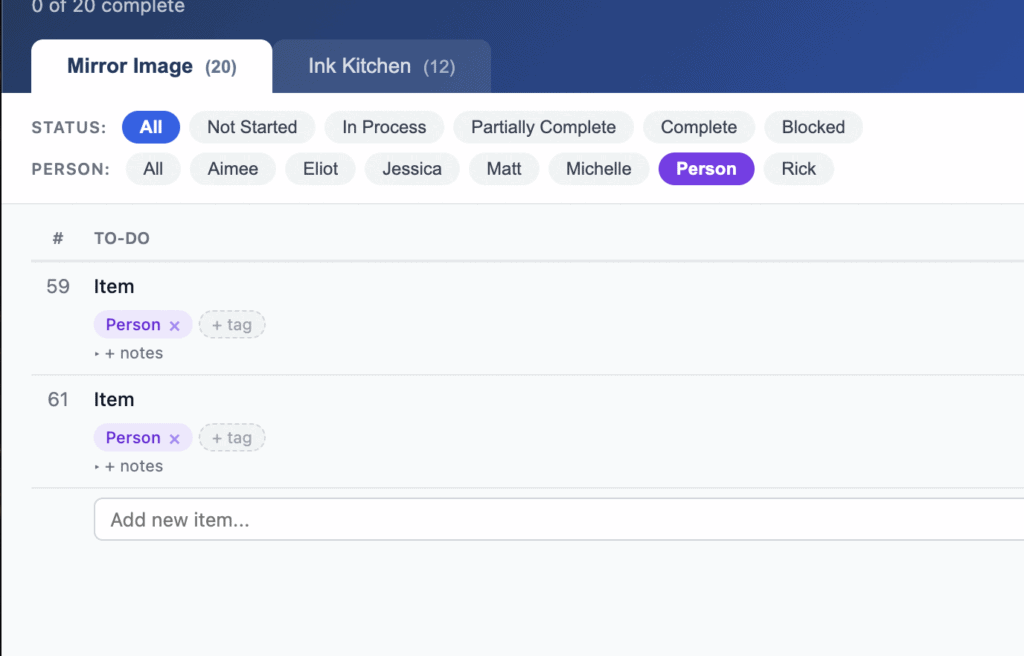
How it works
Same architecture I already use on our shop floor for production data collection: a single HTML file talking to Google Sheets through Apps Script REST endpoints. Vanilla JavaScript frontend, no frameworks, no dependencies. Color-coded status badges, person tagging, collapsible source citations linking back to original conversations, editable everything. The entire backend is under 130 lines of code.
The best part is I can just talk to my phone and it listens and it updates my action list.
What we ended up with
Twelve unstructured transcripts became a live, shared task management system in a single working session. Every item links back to its source conversation. Anyone on the team can add new items. Integration with an AI desktop agent is in progress.
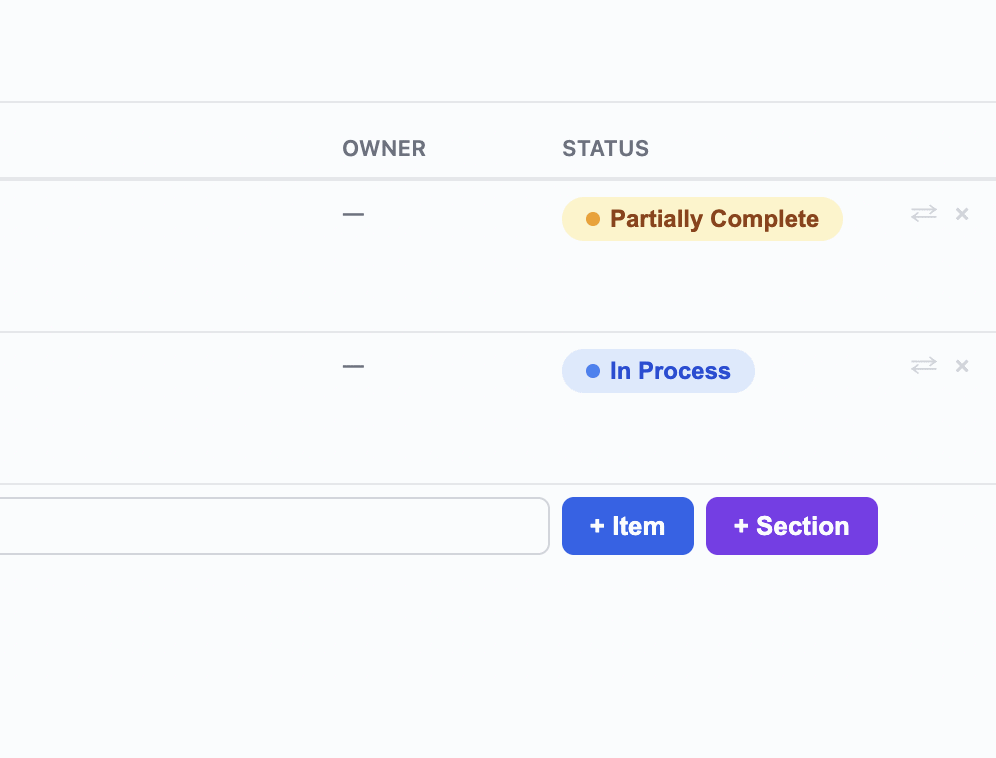
Total cost: zero dollars. Google Sheet, Apps Script, and GitHub Pages are all free tier. The only ongoing cost is the AI subscription we already pay for.
Tools used:
- Claude (Opus 4.6 — transcript parsing, task extraction, app development)
- Google Sheets + Apps Script (backend, under 130 lines)
- GitHub Pages (free hosting)
- Vanilla JavaScript (single-file frontend)


Comments