In 2015, Rick wrote about Google’s Project Jacquard and the “smart shirt” for battlefield wound detection. He predicted that computerized clothing was coming sooner than we imagined. Brian Peters dropped a comment noting that Google and Levi’s had already joined forces. Rick’s closing line: hold on, it’s coming. Computerized T-Shirts have Arrived.
And it’s a lot weirder and more practical than anyone expected.
The global smart clothing market was valued at $5.16 billion in 2024 and is projected to reach $21.48 billion by 2030, growing at a 26.2% compound annual growth rate. A separate analysis from MarketsandMarkets projects the market could hit $26.89 billion by 2035. This isn’t speculative anymore.
Here’s what’s actually on the market or in late-stage development right now:
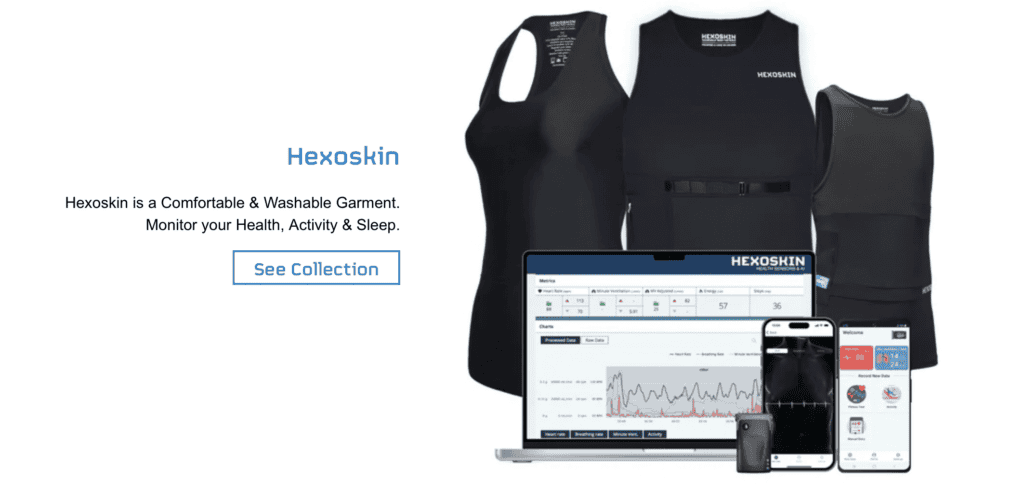
Hexoskin Smart Shirts are the most research-validated smart garments available. These shirts have textile sensors woven directly into the fabric that continuously monitor ECG, heart rate, heart rate variability, breathing rate, minute ventilation, and activity levels. They’ve been cited in over 275 scientific publications. They’re machine washable. They come in men’s, women’s, and children’s sizes. You can buy one today.
Sensoria Smart Socks
embed textile pressure sensors into socks for real-time gait analysis and balance feedback. Originally developed for runners, they’ve found a second life in stroke rehabilitation, clinicians use the detailed foot-pressure data to identify walking asymmetries and tailor rehab programs. The socks are lightweight, comfortable, and designed for daily wear.
Google’s Project Jacquard, the one Rick wrote about in 2015, did launch with Levi’s in 2017 as a $350 Commuter Trucker Jacket with touch-sensitive conductive yarns woven into the sleeve. A brush of your cuff could skip songs, get navigation directions, or take a phone call. It evolved into a $198 Classic Trucker and a Sherpa version by 2019, and expanded to a Saint Laurent backpack. It remained more proof-of-concept.
Purdue University engineers
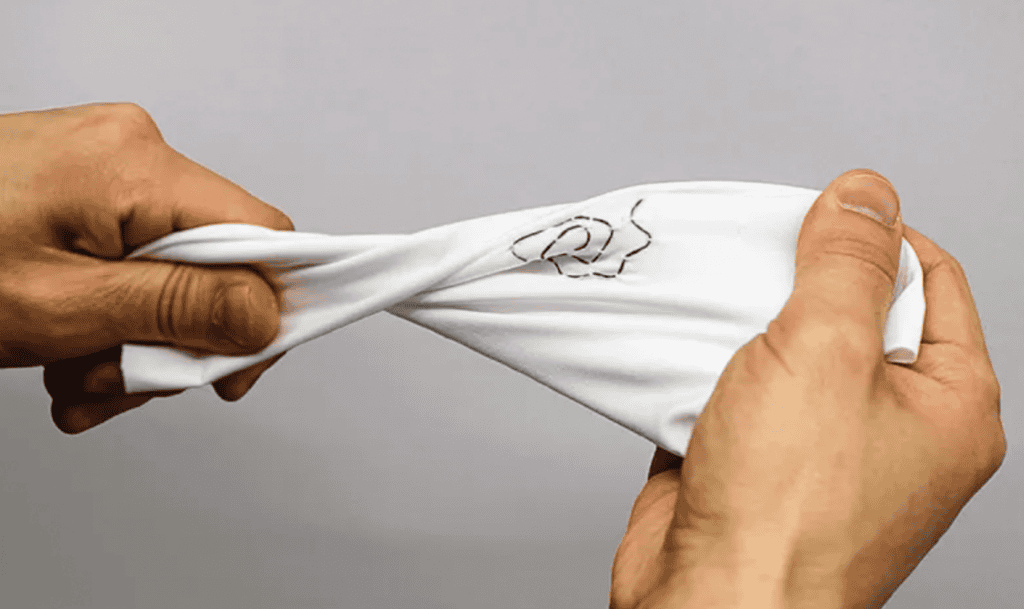
recently developed a method to turn ordinary cotton clothing into battery-free wearables by sewing flexible silk-based coils into the fabric that harvest energy from ambient Wi-Fi and radio signals. One prototype is a glove whose fingertips light up near a live electrical cable. And cardiac monitoring sewn into a washable sweatband. No batteries, no charging — just ambient energy powering circuitry embedded in the textile.
And in February 2025, a developer named Sigma-Fit built an AI model that analyzes heat emission points on the body and designs fabrics that cool specific zones with plans to incorporate it into a t-shirt. That’s Rick’s 2015 prediction about waving your hand, essentially realized through a completely different technology path.
The bigger picture is that the garment itself is becoming the device. Not a gadget clipped onto clothing, not a watch strapped to your wrist, the fabric. Conductive yarns, piezoelectric fibers that generate electricity from movement, thermochromic materials that change color with temperature, and biosensors woven into the textile structure are all either shipping or in advanced development. The e-textiles and smart clothing market is valued at $22.08 billion in 2025 and is projected to reach $274.99 billion by 2034 at a 32.34% CAGR.
Rick asked in 2015 whether Brando was about to meet the Terminator.
In 2026, the answer is: they met, and the Terminator is wearing a machine-washable cardiac monitoring shirt that charges itself from your router. The future showed up. It just looks like a regular t-shirt.


Comments